Allgeier Engineering participates in the European Research Project “5G DeLux”
When 5G Can’t Stop at the Border: Allgeier Engineering at 5G DeLux
Connected mobility doesn’t end at the national border. But that’s exactly where it becomes particularly challenging.
The 5G DeLux research project addresses a key question for the mobility of tomorrow: How can a vehicle remain reliably connected as it travels from Germany to Luxembourg—crossing not only a border but also different networks, operator structures, and technical handover points?
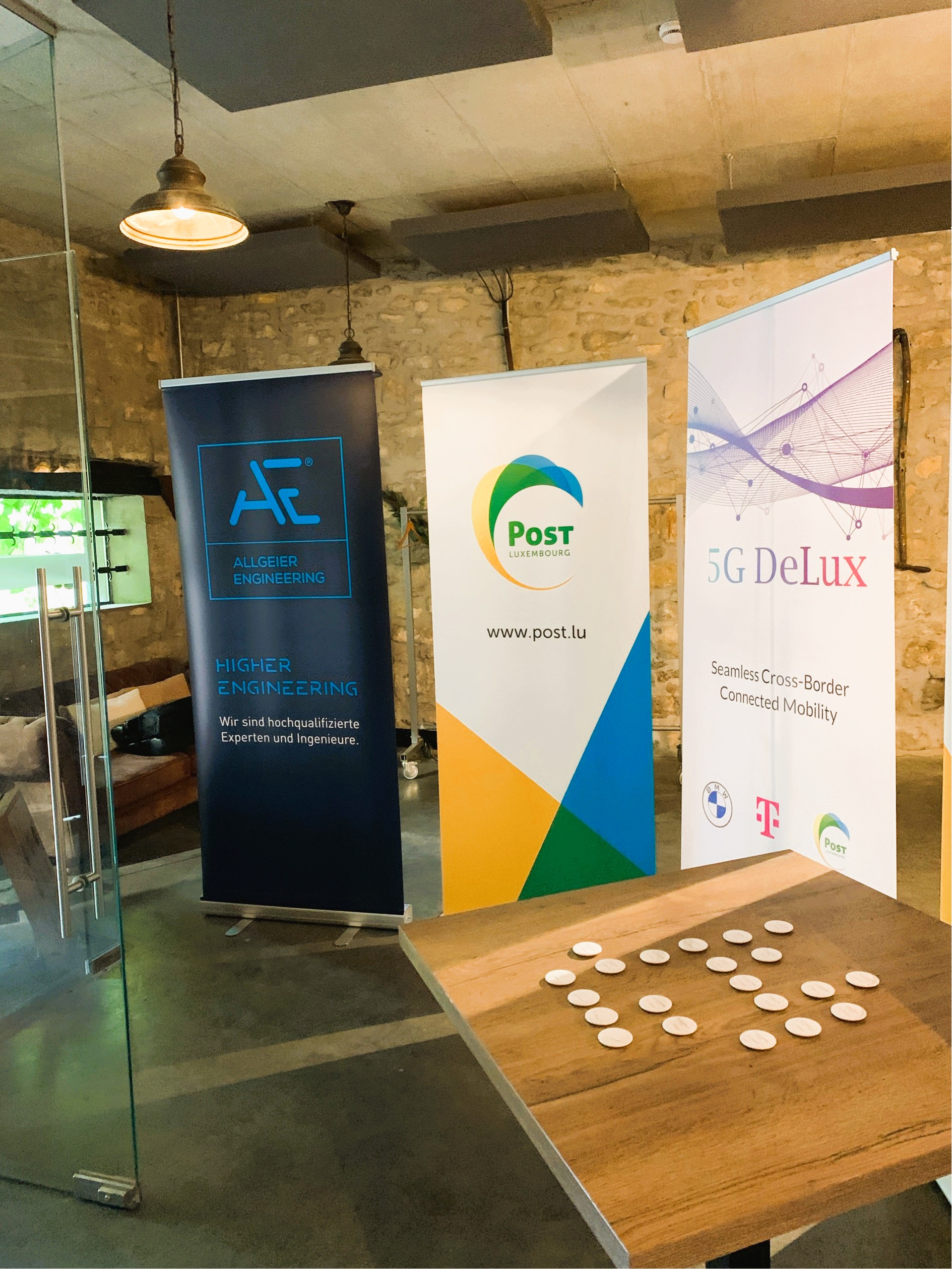
Together with partners such as BMW, Telekom, and POST Luxembourg, the project is working to achieve seamless cross-border 4G and 5G connectivity. The goal is to make data and voice connections in the vehicle so stable and traceable that they can reliably support future applications related to connected and automated mobility.
Allgeier Engineering was involved in key technical tasks specific to the project—particularly in software development, on-site testing, and technical project consulting. A particular focus was placed on developing a solution for measuring, evaluating, and visualizing connectivity.
The dashboard we developed reveals what happens behind the scenes of mobile vehicle communication: How stable is the connection? How does network quality vary along the route? What happens when crossing a border? And how can this data be presented in a way that allows it to be technically evaluated and clearly communicated within the project context?
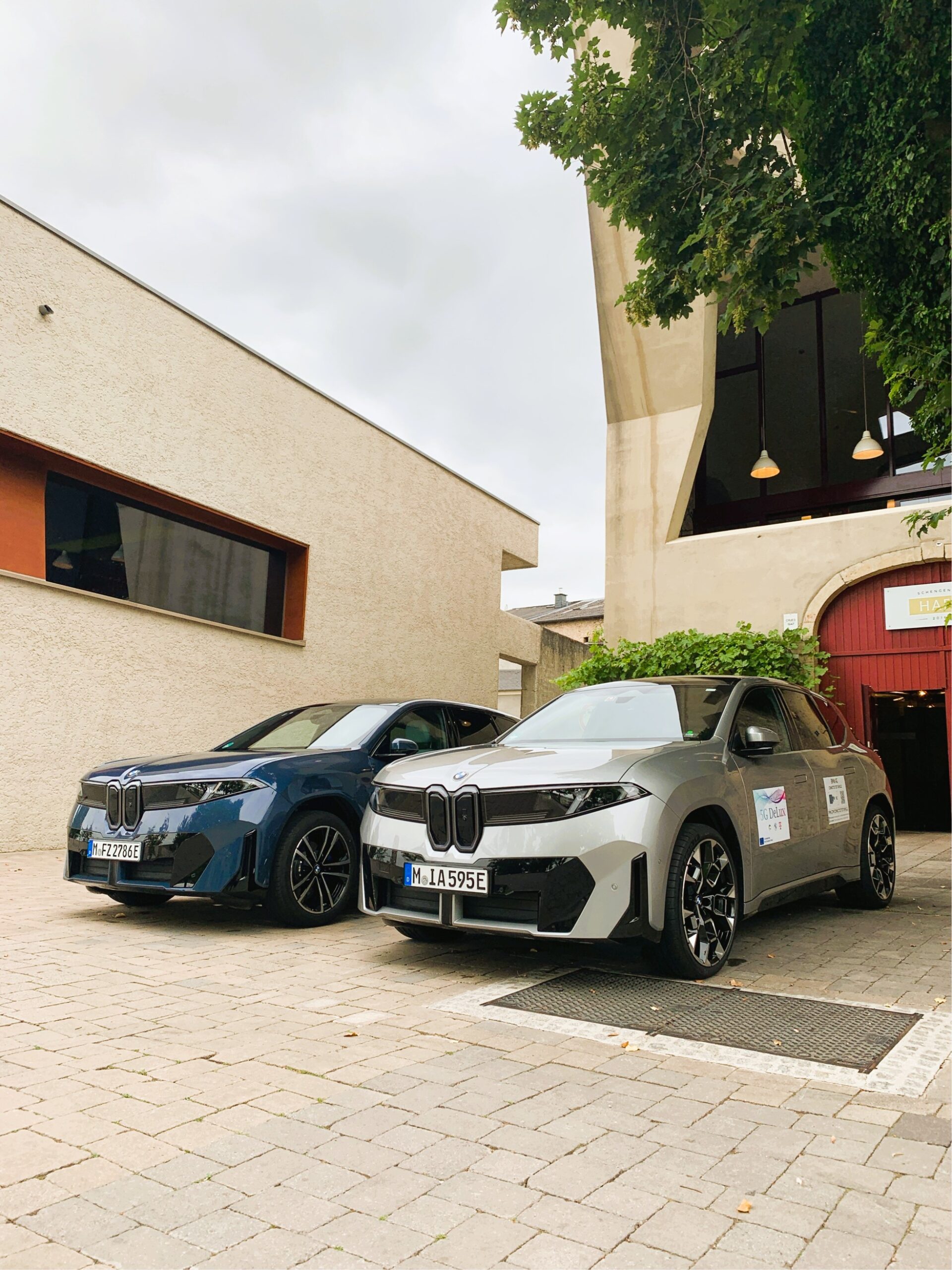
This transparency is crucial, especially for 5G-V2X and connected mobility. After all, network coverage alone does not answer the question of how well a connection actually works in real-world driving conditions. That is why the solution was not only developed but also tested—including on-site in the Perl/Schengen area, where cross-border connectivity can be experienced firsthand.
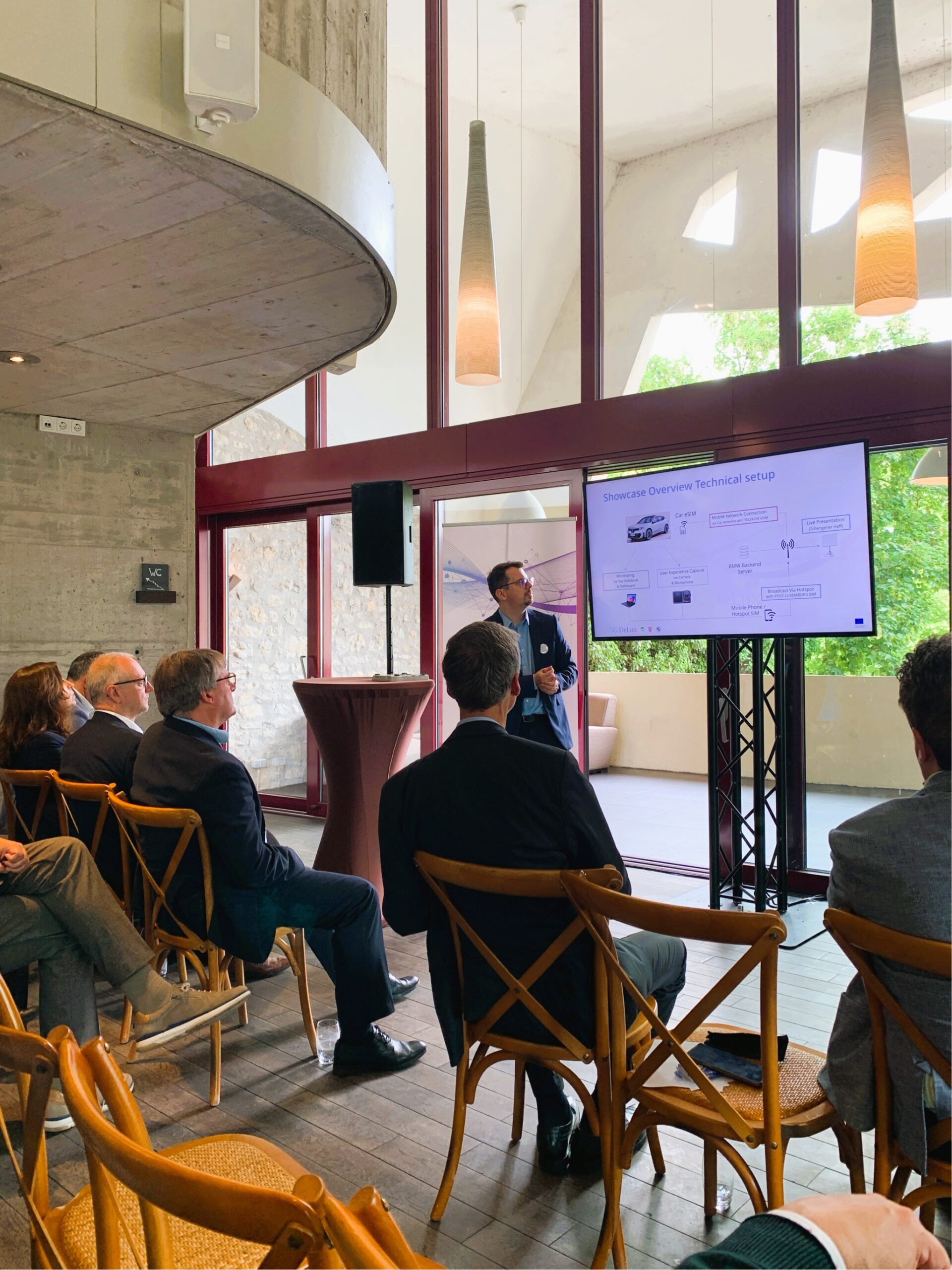
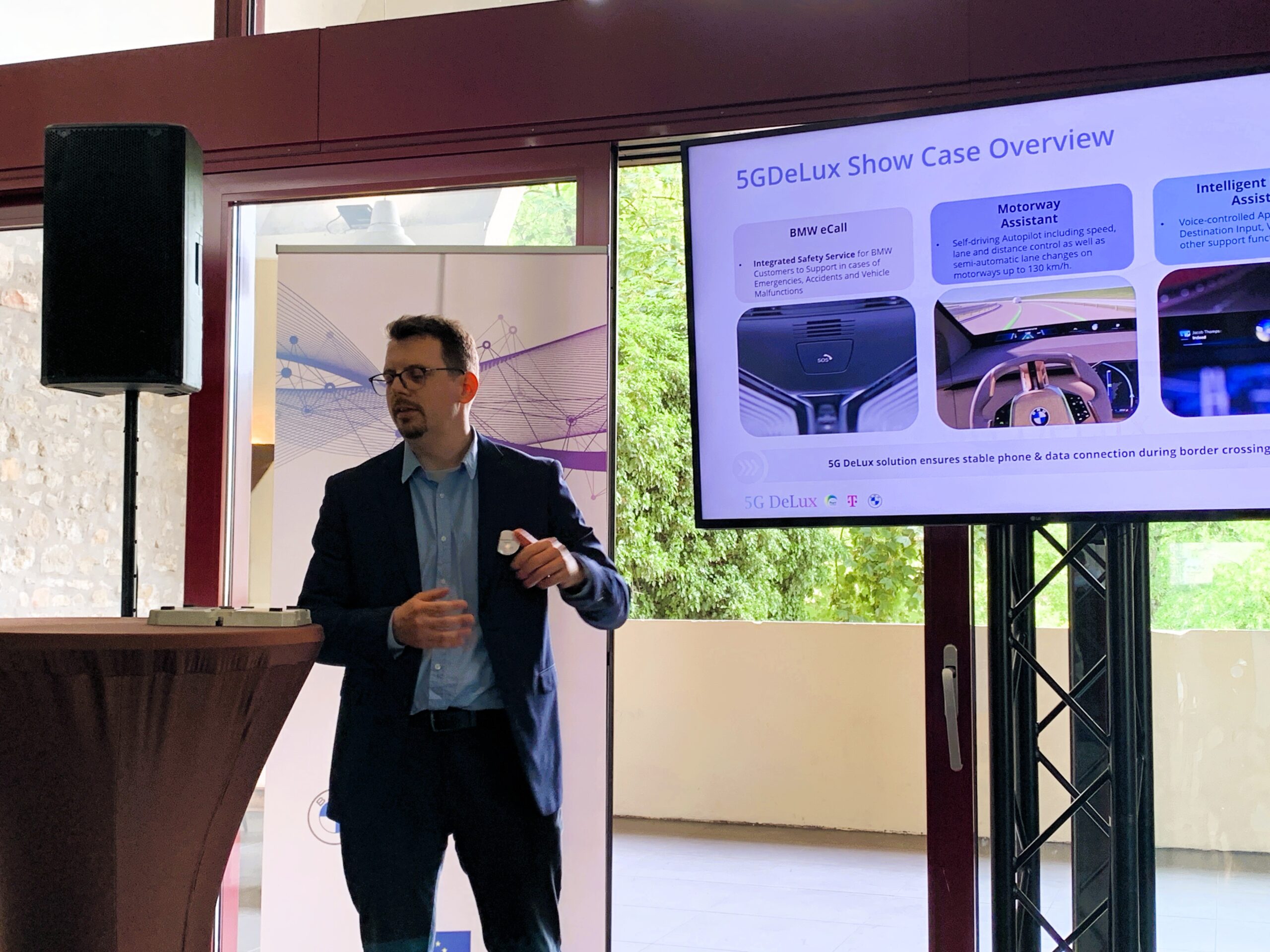
At Demo Day in The Hague, the solution was presented to an international audience of experts. Our colleague Florian Burau presented the showcases and the developed software solution—including the dashboard—thus clearly illustrating the contribution that engineering, software, and testing make to the mobility of the future.
For Allgeier Engineering, 5G DeLux demonstrates very concretely just how much automotive engineering is changing: Vehicles are increasingly becoming part of digital ecosystems. They communicate with networks, platforms, infrastructure, and other road users. This requires robust software, reliable testing, and a deep understanding of the interface between the vehicle, mobile networks, and applications.
We are pleased to be part of this European innovation project and to contribute our technical expertise to the further development of seamless cross-border connectivity.